



We would like to congratulate Dr. Mark Bayfield from York University, who won a 500$ credit for services offered by Génome Québec. We would like to thank everyone that filled out the annual survey.
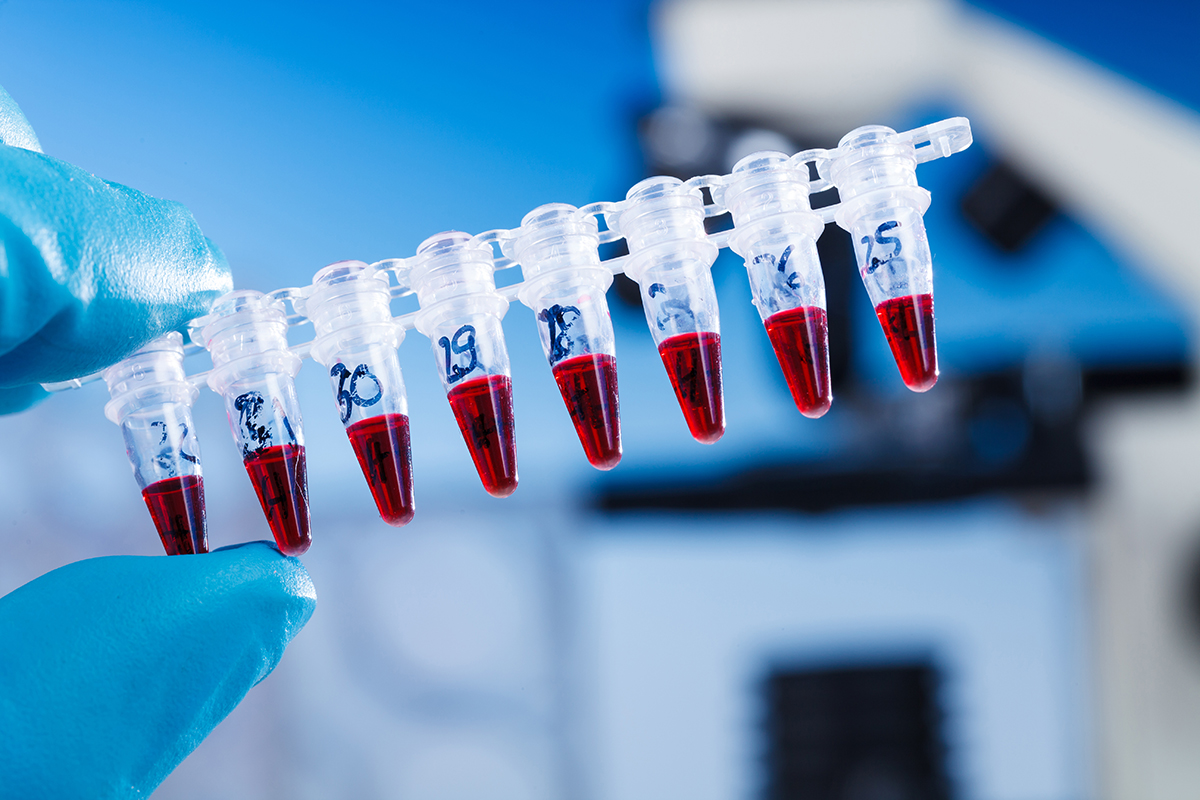
The best way to organise samples and/or primers submitted in PCR strip tubes is to regroup all samples (plasmids, PCR products, phage or BAC) one after the other. The tubes must be properly labelled with the corresponding well ID on the Sample Submission Form: A01, A02, A03, etc.
The primers must be aliquoted in PCR strip tubes in the same order as their associated DNA samples.
The best way to organise samples and/or primers submitted in a 96-well plate is to regroup all samples (plasmids, PCR products, phage or BAC) one after the other starting with well A01 progressing sequentially to A02, A03 to A12, B01 to B12 and so on. The primers may be aliquoted on the same plate however they must be aliquoted after the full set of samples, beginning in the row below the last samples. If there are not enough empty wells on the plate use a new properly identified plate.
Samples and primers must be organized in exactly the same positions as indicated in your Sample Submission Form.
It is important to note :
Download examples
You must complete plate 1 of the Sample Submission Form before beginning plate 2.
Volume and concentration required per sequencing sample:
| Volume | Concentration | ||
|---|---|---|---|
| Length of PCR product | Concentration estimate on agarose gel | ||
| Unpurified PCR | 20 µl minimum | 100-200 pb 200-500 pb 500-1000 pb 1000-2000 pb 2000 pb |
0.5-1.5 ng/µl 1.5-5 ng/µl 2-10 ng/µl 5-20 ng/µl 20-50 ng/µl |
| Purified PCR | 5 µl minimum | ||
| Plasmid DNA or phage | 5 µl minimum | 100-500 ng/µl | |
| BAC/PAC end sequencing | 20 µl minimum | 500 ng/µl minimum | |
Concentration and volume required per sequencing sample:
| Volume | Concentration | |
|---|---|---|
| Primer | 10 µl | 5 µM |
The Sequencing Service provides the following standard set of common primers free of charge:
| T7 | 5' - TAATACGACTCACTATAGGG - 3' |
| T3 | 5' - AATTAACCCTCACTAAAGGG - 3' |
| SP6 | 5' - TATTTAGGTGACACTATAG - 3' |
| M13 forward | 5' - GTAAAACGACGGCCAGT - 3' |
| M13 reverse | 5' - GGAAACAGCTATGACCATG - 3' |
| BGH reverse | 5' - TAGAAGGCACAGTCGAGG - 3' |
| T7 terminateur | 5' - GCTAGTTATTGCTCAGCGG - 3' |
| pGEXF | 5' - GGGCTGGCAAGCCACGTTTGGTG - 3' |
| pGEXR | 5' - CCGGGAGCTGCATGTGTCAGAGG - 3' |
To the question 'What type of service is required?' answer 'DNA preparation' only if you are submitting fresh bacterial colonies or glycerol stocks. If you are submitting extracted plasmids, PCR products (purified or not), phage or BAC answer 'Sequencing'.
Answer NO to the question 'Will you be using our SNP discovery service post sequencing?'. For more information about this service, please contact the sequencing platform's director Pierre Lepage at 514-398-3311 extension 00346 or by email.
Lastly, answer the following question 'What kind of container(s) are you using?' and download the form.
Once the samples are accepted, the normal delay for sequencing is from 2 to 4 days.
From your account on Nanuq's home page click on your project name listed under the heading 'Project Data/Results'. Choose the submission number corresponding to the sequences you wish to view and click on the corresponding sequencing date.
You are now able to look at the chromatogram by clicking on 'T' (trace) or view the text version of the sequence by clicking on the length of the sequence.
It is also possible to download the chromatogram(s) (AB1 or SCF format) or the text version of the sequence by choosing 'Search/Download Data' under the heading 'tools' in the top menu.
Samples of good quality at the recommended concentration usually generate up to 800 bases of good quality sequence.
Once you have verified the quantity and quality of your samples, do not hesitate to contact the Sequencing Service group for help.
It is essential to look at the actual chromatogram to verify the quality of your sequence. The base calling program identifies all bases and occasionally misidentifies bases of poor quality, such as the first 40 bases following the primer and the end of the sequence.
Therefore the use of the 'Mask the sequence' function is highly recommended when looking at the text version of a sequence in Nanuq. This function is listed in the menu to the left under 'Manipulation'. It masks the bases that are under a selected quality threshold (15 by default). Those bases will be replaced by an 'N'.
First and foremost, it is very important to indicate your chosen method of payment when opening an account. This is done in the Sequencing Request Form under the section 'Method of Payment'.
If you wish to pay by cheque, the purchase order (PO) number is required for all sample submissions. Enter the PO number in row 15 of the sample submission sheet.
If you wish to pay by credit card, it is not necessary to provide your credit card number when you are submitting samples. It will be requested upon invoicing.
Payments can only be made by cheque or credit card. A purchase order (PO), requisition, or account number can be added to your invoice upon request.
The cheque must be made to the order of Génome Québec and sent to:
The main compatible Internet browsers for both MACs and PCs are: