Scientist holding a glowing gene-therapy vial in a clean clinical laboratory with blurred research equipment in the background.

Future Gene Therapy News Update: What Changed and What to Watch in 2026

Gene therapy is transitioning from experimental promise to clinical reality in 2026, with recent trial results demonstrating measurable therapeutic outcomes in previously untreatable genetic diseases. The field has reached an inflection point where specific interventions are producing reproducible clinical benefits, regulatory pathways are becoming clearer, and the technical barriers that limited early applications are yielding to refined delivery systems and improved vector designs. For researchers and healthcare professionals tracking therapeutic development, the current landscape demands attention not to distant possibilities but to …

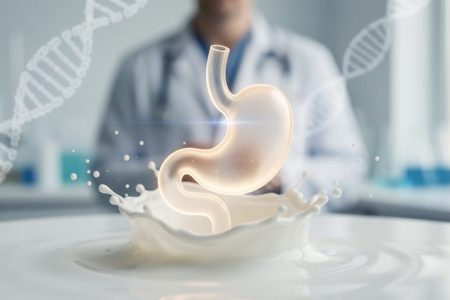
Science-inspired close-up showing a translucent organ-like silhouette with a soft milk splash and blurred genomic and lab background textures, representing lactase persistence and evolutionary adaptation.

Is Lactose Intolerance a Genetic Mutation? Understanding the Evolutionary Adaptation

Lactose intolerance is not a genetic mutation in the traditional sense. Rather, it represents the ancestral human condition, where lactase production declines after weaning. The true mutation is lactase persistence, a relatively recent evolutionary adaptation that allows certain populations to digest lactose into adulthood. This distinction fundamentally reframes how we understand the genetics of lactose digestion and challenges common assumptions about what constitutes a genetic “abnormality.”
For researchers and healthcare professionals working in genomics, precision matters. The terminology we use shapes both clinical…

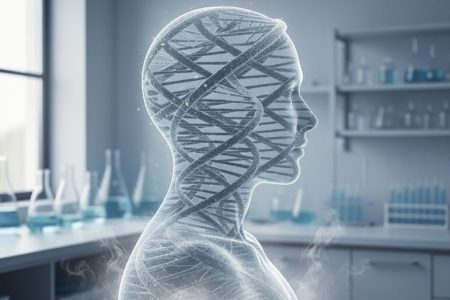
A profile silhouette made of translucent DNA strands with a subtle smoky haze and blurred laboratory equipment in the background, representing genetics research into tobacco dependence.

What Is Smoking Genetics and How Does It Influence Tobacco Dependence?

Genetic factors in smoking habits refer to the heritable biological variations that influence an individual’s susceptibility to tobacco initiation, nicotine dependence, and smoking cessation outcomes. These genetic influences operate through multiple pathways, including nicotine metabolism, neurobiological reward systems, and behavioral regulation mechanisms, collectively shaping why some individuals become dependent smokers while others do not despite similar exposure patterns.
Understanding the genetic architecture of smoking behavior has become essential for personalized approaches to tobacco control and cessation …

Gloved scientist’s hands holding a gene therapy vial on a clean laboratory workbench with a soft glowing DNA helix in the background.

Gene Therapy Drug Development News Update: What Changed and What to Watch in 2026

Gene therapy drug development in 2026 confronts a period of measured progress rather than breakthrough momentum. The first quarter of this year brought only two new regulatory approvals globally across gene, cell, and RNA therapies, signaling a slower approval cadence even as the development pipeline continues to expand. With 46 FDA-approved advanced therapies now available and 264 agents under investigation in the U.S. alone, the field faces a critical gap between developmental …

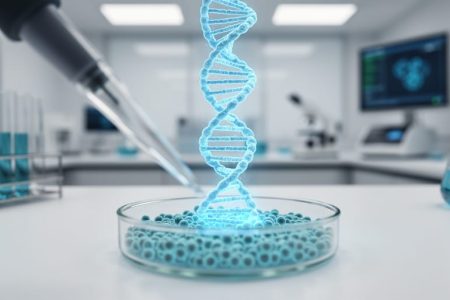
Close-up of a glowing DNA double helix overlaying cultured human cells in a sterile laboratory petri dish, representing CRISPR gene editing.

What Is CRISPR Gene Editing in Humans (and How Does It Work)?

CRISPR gene editing in humans is a precise molecular technique that uses the CRISPR-Cas9 system to locate, cut, and modify specific DNA sequences within living human cells, enabling targeted correction of genetic mutations that cause disease. This technology has moved decisively from laboratory concept to clinical reality, with regulatory frameworks now supporting controlled therapeutic applications in patients with previously untreatable genetic disorders.
The significance for healthcare professionals and researchers lies in understanding …

Soft indoor haze representing secondhand smoke drifting near testing tools like a lab tube and swab on a countertop, suggesting nicotine exposure evaluation and related risk assessment.

Secondhand Smoke Nicotine Exposure: Understanding Your Risk, Genetic Susceptibility, and Where to Get Tested

Yes, secondhand smoke contains nicotine. When tobacco burns, it releases nicotine into both mainstream smoke (exhaled by the smoker) and sidestream smoke (emitted directly from the burning cigarette), creating an environmental exposure that affects nonsmokers through inhalation and dermal absorption. For the genomics community, this confirmation opens a more pressing question: how does nicotine exposure from secondhand smoke interact with individual genetic architecture to influence health outcomes, and what tools can clinicians and researchers use to assess exposure and stratify risk?
Nicotine exposure through secondhand smoke …