

Type 1 diabetes is an autoimmune disorder in which the body’s immune system destroys insulin-producing beta cells in the pancreas, leading to absolute insulin deficiency and lifelong dependence on exogenous insulin therapy. Unlike its polygenic counterpart type 2 diabetes, type 1 disease exhibits strong genetic susceptibility concentrated in the major histocompatibility complex on chromosome 6, particularly the HLA class II region, alongside contributions from over 60 additional non-HLA loci that modulate immune regulation and beta cell function.
For researchers and clinicians working at the intersection of genomics and diabetes care, understanding type 1 diabetes through a genetic lens has evolved from academic curiosity to clinical necessity. Genomic profiling now enables risk stratification in newborns and first-degree relatives, supports differential diagnosis in ambiguous presentations such as latent autoimmune diabetes in adults, and informs precision medicine approaches that account for monogenic subtypes previously misclassified as type 1 disease. The translation of genetic discovery into clinical workflows has accelerated since 2020, driven by large-scale biobanking initiatives, improved polygenic risk score methodologies, and international collaborations linking genotype to phenotype across diverse populations.
This article provides a comprehensive explainer on type 1 diabetes tailored to genomics professionals and healthcare stakeholders. We define the condition within its genetic architecture, examine how genomic data informs pathophysiology and clinical management, categorize relevant subtypes including monogenic mimics, and showcase current applications in screening programs, drug development, and personalized treatment protocols. Ethical dimensions of genetic testing in pediatric populations and implications for healthcare equity receive dedicated attention, reflecting the collaborative priorities essential to responsible implementation of genomics in diabetes care.
What Type 1 Diabetes Means: Biology and Autoimmune Mechanisms

Type 1 diabetes is an autoimmune condition in which the body’s immune system mistakenly attacks and destroys the insulin-producing beta cells located in the islets of Langerhans within the pancreas. This progressive destruction leads to an absolute deficiency of insulin, the hormone essential for transporting glucose from the bloodstream into cells for energy. Without sufficient insulin, blood glucose levels rise uncontrollably, causing hyperglycemia and disrupting cellular metabolism across multiple organ systems. The onset typically occurs in childhood or adolescence, though it can emerge at any age, and once beta-cell destruction is complete, affected individuals require lifelong insulin replacement therapy to survive.
The pathophysiology differs fundamentally from type 2 diabetes. While type 2 diabetes involves insulin resistance and relative insulin deficiency with preserved but dysfunctional beta-cell mass, type 1 diabetes is characterized by near-total loss of insulin secretion due to cellular destruction. This distinction matters clinically: type 1 diabetes patients face acute metabolic decompensation without exogenous insulin, whereas type 2 diabetes progression is gradual and often manageable initially through lifestyle modification and oral medications. The autoimmune mechanism in type 1 diabetes is marked by the presence of circulating autoantibodies against beta-cell antigens, including insulin autoantibodies, glutamic acid decarboxylase antibodies, and islet antigen-2 antibodies. Detection of these autoantibodies precedes clinical symptoms by months to years, defining a pre-symptomatic phase during which beta-cell mass declines.
- Autoimmune disease
- A condition in which the immune system erroneously targets and attacks the body’s own tissues, mistaking them for foreign threats. In type 1 diabetes, this misdirected immune response specifically destroys insulin-producing cells.
- Beta cells
- Specialized cells within the pancreatic islets of Langerhans that synthesize and secrete insulin in response to blood glucose levels. Their destruction defines the pathogenesis of type 1 diabetes.
- HLA complex
- The human leukocyte antigen system, a group of genes encoding proteins that regulate immune recognition and response. Specific HLA variants confer the highest genetic risk for developing type 1 diabetes by influencing how the immune system distinguishes self from non-self.
- Polygenic risk score
- A quantitative measure combining the effects of multiple genetic variants across the genome to estimate an individual’s likelihood of developing a particular condition. In type 1 diabetes, these scores integrate HLA and non-HLA loci to stratify disease risk.
- Autoantibodies
- Antibodies produced by the immune system that target the body’s own proteins or cells. Their presence in type 1 diabetes signals active autoimmune attack against pancreatic beta cells.
Genetics plays a central role in type 1 diabetes susceptibility. The strongest risk determinants reside in the HLA region on chromosome 6, particularly HLA class II genes that encode molecules responsible for presenting antigens to T cells. Specific haplotypes, such as HLA-DR3-DQ2 and HLA-DR4-DQ8, dramatically increase risk, while others confer protection. Beyond the HLA complex, genome-wide studies have identified over 60 non-HLA loci contributing smaller individual effects but collectively shaping disease architecture. These include genes regulating immune tolerance, T-cell activation, and beta-cell function. The polygenic nature means type 1 diabetes arises from the combined influence of multiple genetic variants, each modulating immune system behavior or beta-cell vulnerability, rather than a single causative mutation. This genetic architecture underpins modern approaches to risk prediction, early diagnosis, and targeted intervention strategies now being implemented in clinical and research settings.
How Genomics Informs Type 1 Diabetes Risk and Diagnosis
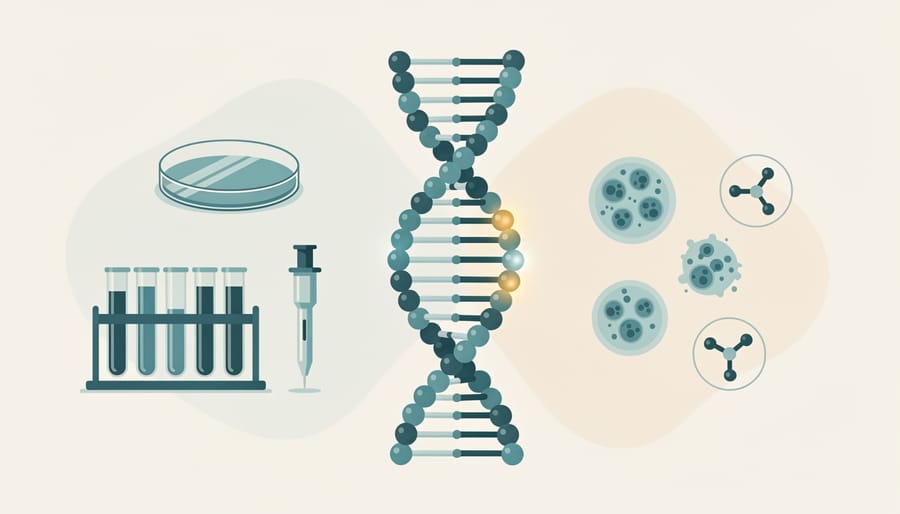
HLA Genotyping and Major Histocompatibility Complex
The human leukocyte antigen (HLA) region on chromosome 6p21 accounts for roughly 40% of the genetic susceptibility to type 1 diabetes, making it the most influential genomic locus in disease risk. HLA class II genes encode molecules that present antigenic peptides to CD4+ T cells, initiating immune responses. In type 1 diabetes, specific HLA-DR and HLA-DQ haplotypes dramatically increase risk by presenting beta-cell antigens in ways that trigger autoimmune destruction rather than tolerance.
HLA-DR3-DQ2 (specifically DRB1*03:01-DQA1*05:01-DQB1*02:01) and HLA-DR4-DQ8 (DRB1*04:01/04:05-DQA1*03:01-DQB1*03:02) are the highest-risk haplotypes. Individuals heterozygous for both DR3-DQ2 and DR4-DQ8 face a 20-fold to 40-fold increased risk compared to the general population. The DQ8 molecule’s peptide-binding groove favors presentation of insulin peptides in a configuration that activates autoreactive T cells, while DQ2 similarly presents proinsulin fragments that escape central tolerance mechanisms.
Conversely, certain haplotypes such as DQB1*06:02 are strongly protective, reducing risk even in the presence of other susceptibility alleles. This dominant protection likely reflects efficient negative selection of autoreactive T cells in the thymus or peripheral regulatory mechanisms.
Newborn screening programs now routinely perform HLA genotyping to identify infants at elevated genetic risk. Cohorts such as TEDDY (The Environmental Determinants of Diabetes in the Young) use high-risk HLA genotypes to enroll families into longitudinal studies tracking autoantibody development and environmental triggers. These initiatives enable early intervention trials and provide genetic counseling, though they complement, not replace, assessment of non-HLA variants like PTPN22, CTLA4, IL2RA, INS variants that fine-tune immune regulation.
Non-HLA Genetic Variants and Immune Regulation
Beyond the HLA region, over 60 non-HLA loci contribute to type 1 diabetes susceptibility by modulating immune tolerance and autoimmune activation. These variants collectively account for roughly 15% of genetic risk, each exerting modest individual effects that become clinically meaningful when aggregated into polygenic risk scores.
The INS gene on chromosome 11p15 encodes preproinsulin and represents the second strongest genetic determinant after HLA. A variable number of tandem repeats (VNTR) in the INS promoter influences thymic expression of insulin: shorter class I alleles reduce central tolerance by limiting negative selection of insulin-reactive T cells, increasing autoimmunity risk. Longer class III alleles confer protection by promoting deletion of autoreactive clones during immune development.
PTPN22 encodes a lymphoid tyrosine phosphatase critical for T-cell receptor signaling. The R620W variant creates a gain-of-function allele that impairs regulatory T-cell suppression and lowers the threshold for T-cell activation, enabling escape of autoreactive lymphocytes. This variant associates with multiple autoimmune conditions, reflecting shared pathways of immune dysregulation.
IL2RA and CTLA4 govern regulatory T-cell function and immune checkpoint control. IL2RA codes for the CD25 subunit of the interleukin-2 receptor; reduced expression compromises regulatory T-cell stability and suppressive capacity. CTLA4 provides inhibitory signals that dampen T-cell responses; variants weaken this brake on autoimmunity, permitting sustained attack on beta cells.
Polygenic risk scores integrate these loci with HLA genotypes using weighted effect sizes derived from genome-wide association studies in large cohorts like Type 1 Diabetes Genetics Consortium participants. Validation studies demonstrate that individuals in the highest decile carry 20-fold greater risk than those in the lowest. Clinicians apply these scores in newborn screening programs to identify candidates for natural history studies and prevention trials, stratifying follow-up intensity based on cumulative genetic burden rather than family history alone.
Categories of Type 1 Diabetes: Phenotypic and Genetic Subtypes
Type 1 diabetes encompasses more phenotypic and genetic diversity than its traditional classification suggests. Recognizing these subtypes matters because genomic profiling now enables clinicians to distinguish between conditions that present similarly but respond to different therapeutic approaches, improving diagnostic precision and treatment outcomes.
Classic childhood-onset type 1 diabetes typically manifests before age 20 with rapid beta-cell destruction, ketoacidosis at diagnosis, and strong HLA associations, particularly HLA-DR3-DQ2 and HLA-DR4-DQ8 haplotypes. This presentation accounts for the majority of cases and follows the autoimmune pathway described in earlier sections. However, adult-onset presentations introduce diagnostic complexity. Latent autoimmune diabetes in adults (LADA) develops more gradually, often after age 30, with slower progression to insulin dependence and preserved C-peptide levels for months or years. LADA patients carry HLA risk alleles and positive autoantibodies but at lower frequencies than pediatric cases, and they may initially respond to oral medications before requiring insulin. Genetic risk scores help differentiate LADA from type 2 diabetes in adults who lack clear autoimmune markers, guiding appropriate therapy escalation.
Fulminant type 1 diabetes represents an acute subtype characterized by abrupt onset, absence of autoantibodies in many cases, and near-normal HLA patterns, suggesting distinct pathogenic mechanisms possibly involving viral triggers or innate immune dysregulation. This subtype predominates in East Asian populations and requires immediate aggressive insulin therapy.
Monogenic forms of diabetes, while distinct diseases, frequently receive initial misdiagnosis as type 1. Maturity-onset diabetes of the young (MODY) results from single-gene mutations affecting beta-cell function, typically in HNF1A, HNF4A, or GCK, and follows autosomal dominant inheritance. Patients often have a strong family history, lack autoantibodies, and may respond well to sulfonylureas rather than insulin. Neonatal diabetes diagnosed before six months of age usually stems from mutations in KCNJ11 or ABCC8 and can transition from insulin to oral sulfonylurea therapy with genetic confirmation.
Genomic profiling resolves these diagnostic ambiguities by integrating HLA typing, polygenic risk scores, autoantibody status, and targeted gene sequencing. Identifying the correct subtype directly influences treatment selection, from immunotherapy eligibility in classic type 1 to sulfonylurea switching in MODY, ensuring patients receive therapies matched to their underlying pathophysiology rather than their clinical presentation alone.
How Genomics-Guided Management Works in Clinical Practice

Integrating genomics into type 1 diabetes care follows a structured pathway that begins at diagnosis and extends through long-term management. Clinicians now combine genetic risk scores with clinical biomarkers to stratify patients into distinct risk categories, guiding both monitoring intensity and therapeutic choices. This precision approach requires coordination among endocrinologists, genetic counselors, laboratory geneticists, and diabetes educators working from shared genomic data.
The process typically starts with HLA genotyping and polygenic risk score calculation at or shortly after diagnosis. High-risk HLA haplotypes (DR3-DQ2, DR4-DQ8) combined with elevated polygenic scores identify individuals likely to experience rapid beta-cell loss, prompting more aggressive intervention. Conversely, lower-risk profiles may indicate slower disease progression, allowing clinicians to adjust monitoring schedules and consider beta-cell preservation strategies with greater potential for success. This risk stratification proves especially valuable in newly diagnosed adults, where distinguishing classic type 1 diabetes from LADA influences treatment timelines and insulin regimen selection.
Precision monitoring builds on genetic insights by tracking C-peptide levels and residual beta-cell function in the context of known genetic architecture. Patients carrying protective variants at non-HLA loci often retain measurable C-peptide production longer, making them candidates for therapies aimed at preserving remaining islet function. Endocrinologists use serial C-peptide measurements alongside genetic profiles to time interventions such as immunomodulatory drugs or closed-loop insulin systems, optimizing outcomes during the critical honeymoon phase when some beta-cell activity persists.
Pharmacogenomics contributes to individualized insulin management by identifying variants affecting insulin sensitivity and glucose homeostasis. Polymorphisms in genes regulating incretin pathways, glucose transport, and insulin receptor signaling can explain variable glycemic responses to identical insulin regimens. While pharmacogenomic testing remains primarily a research tool in 2026, specialized diabetes centers incorporate findings from genes like TCF7L2 and KCNJ11 to refine dosing algorithms and predict which patients may benefit from adjunctive therapies beyond insulin alone.
Selection for immunotherapy trials represents the most immediate clinical application of genomic profiling. Clinical trials targeting recently diagnosed patients prioritize enrollment based on specific HLA genotypes, as therapies like teplizumab and antigen-specific immunotherapies show efficacy that varies by genetic background. Researchers screen trial candidates using comprehensive immune-gene panels to match participants with interventions designed for their immunological profile, maximizing the likelihood of beta-cell preservation and durable remission.
This genomics-guided workflow depends on collaborative infrastructure. Genetic counselors interpret test results for families, addressing questions about sibling risk and the implications of carrier status. Laboratory geneticists validate variant classifications and ensure result accuracy, while endocrinologists translate genomic data into actionable care plans. Regular case conferences bring these specialists together to review complex cases where genetic findings challenge standard diagnostic categories or suggest novel therapeutic approaches. This team-based model ensures that genomic information informs clinical decisions without overwhelming providers or patients, embedding precision medicine into routine type 1 diabetes care.
Applications of Genomic Data in Type 1 Diabetes Research and Therapy
Genomic data has moved from research discovery to active clinical and translational use in type 1 diabetes, reshaping prevention efforts, therapeutic development, and healthcare delivery. Large-scale longitudinal cohorts such as The Environmental Determinants of Diabetes in the Young (TEDDY) have tracked thousands of genetically at-risk children from birth, mapping the interplay between high-risk HLA haplotypes, environmental exposures, and the emergence of islet autoantibodies. These cohorts provide the evidence base for intervention windows and have enabled clinical trials testing immune tolerance induction before overt hyperglycemia appears. The Trial to Reduce IDDM in the Genetically at Risk (TRIGR) evaluated dietary modification in infants carrying susceptibility alleles, demonstrating that genomic stratification allows targeted enrollment of participants most likely to benefit from preventive strategies.
Immunotherapy development increasingly relies on genetic profiling to match patients to mechanism-specific interventions. Therapies targeting HLA-restricted autoreactive T cells, such as antigen-specific immunotherapies and checkpoint inhibitor modulation, select trial participants based on their HLA-DR and HLA-DQ genotypes, ensuring the treatment addresses the precise immune pathways driving beta-cell destruction in that individual. This approach has improved trial signal detection and moved the field closer to precision immunomodulation.
Beta-cell replacement strategies, including islet transplantation and stem cell-derived beta-cell therapies, incorporate genetic data to identify candidates with genetic variants associated with slower C-peptide decline or preserved islet function, optimizing graft durability and metabolic outcomes. Gene therapy approaches under investigation aim to restore immune tolerance by editing T-cell receptors or modifying beta-cell antigen presentation, with candidate selection guided by the individual’s genetic risk architecture.
Beyond clinical trials, genomics informs routine healthcare applications across multiple domains:
- Newborn screening programs using polygenic risk scores to identify infants for early monitoring and family education
- Prevention trials enrolling genetically stratified cohorts to test immune interventions before symptom onset
- Immunotherapy stratification matching HLA genotypes to mechanism-specific treatments in active disease
- Stem cell therapy candidate selection based on genetic markers predicting islet graft survival and function
- Genetic counseling for families with multiple affected members, clarifying recurrence risk and informing reproductive decisions
- Pharmacogenomic dosing adjustments for insulin analogs and adjunct therapies guided by variants affecting drug metabolism and response
Population screening initiatives in regions with high type 1 diabetes incidence now integrate genetic testing into public health frameworks, enabling proactive care pathways that reduce diabetic ketoacidosis at diagnosis and support families in navigating the condition. Genetic counselors collaborate with endocrinologists to interpret polygenic scores, communicate probabilistic risk, and connect families to research registries and clinical trial networks. Precision medicine initiatives synthesize genetic, autoantibody, and metabolic data to classify individuals into endotypes, tailoring monitoring intensity, therapeutic targets, and complication risk management. These real-world applications demonstrate that genomics is not a future promise but a present tool, actively improving outcomes and enabling collaborative advances across research, clinical care, and public health in type 1 diabetes.
Ethical and Clinical Considerations in Genomic Type 1 Diabetes Management

Integrating genomic data into type 1 diabetes management introduces ethical complexities that demand careful attention from clinicians, researchers, and policymakers. Genetic risk profiling in pediatric populations raises immediate consent challenges. When testing newborns or young children who cannot provide assent, healthcare teams must ensure parents receive comprehensive counseling about what predictive results mean and do not mean. A high polygenic risk score indicates increased probability, not certainty, and misunderstanding this distinction can create anxiety or fatalistic attitudes that affect family dynamics and the child’s developing self-concept.
Genetic discrimination remains a tangible concern. While legislation in many jurisdictions protects against employment and health insurance discrimination based on genetic information, gaps persist in life insurance, disability coverage, and international contexts. Families considering predictive testing deserve transparent discussion of these risks before proceeding, particularly when results may label a currently healthy child as high-risk without changing immediate clinical management.
Health equity poses a persistent barrier. Access to genomic testing remains concentrated in well-resourced healthcare systems and research institutions, often excluding underserved communities and minority populations. This disparity limits the generalizability of genetic risk models built primarily on European ancestry cohorts and perpetuates inequities in precision medicine benefits. Expanding screening programs requires deliberate investment in diverse populations and community engagement to build trust.
Data privacy protections must extend beyond routine confidentiality standards. Genomic datasets, once de-identified, can be re-identified through linkage, raising concerns about unauthorized access or misuse in research collaborations. Clear policies governing data sharing, storage, and the right to withdraw are essential.
The return of incidental findings adds another layer. Sequencing for type 1 diabetes risk may uncover variants related to other conditions, requiring pre-test discussion of what will and will not be disclosed. Multidisciplinary care teams integrating endocrinologists, genetic counselors, ethicists, and mental health professionals provide the infrastructure necessary to navigate these complexities responsibly, ensuring that genomic advances serve patients equitably and ethically.
Frequently Asked Questions
Can genetic testing predict type 1 diabetes onset?
Genetic testing identifies susceptibility but cannot predict exact onset timing. High-risk HLA haplotypes and polygenic risk scores indicate elevated lifetime risk, which clinicians use to stratify individuals for autoantibody monitoring and prevention trials rather than to forecast when disease will develop.
What is the role of HLA typing in clinical practice?
HLA typing identifies individuals carrying HLA-DR3-DQ2 or HLA-DR4-DQ8 haplotypes, which confer the highest genetic risk. In research cohorts and newborn screening programs, HLA genotyping enables early identification of at-risk children for longitudinal follow-up and enrollment in intervention studies aimed at delaying or preventing autoimmune progression.
How do polygenic risk scores inform clinical decisions?
Polygenic risk scores integrate variants across 60-plus loci to quantify an individual’s genetic susceptibility relative to the population. Clinicians use these scores to prioritize autoantibody screening in relatives of affected individuals, guide intensity of metabolic monitoring, and select candidates for immunotherapy trials targeting specific genetic profiles.
Are genetic tests for type 1 diabetes covered by insurance?
Coverage varies widely by payer and clinical context. HLA typing and targeted genetic panels may be reimbursed when ordered for differential diagnosis (distinguishing type 1 from monogenic diabetes) or in research-supported screening programs, but routine predictive testing in asymptomatic individuals often requires out-of-pocket payment or research enrollment.
Beyond these common questions, healthcare teams frequently ask when to refer families for genetic counseling. Referral is appropriate when multiple family members have type 1 diabetes, when diagnostic uncertainty exists between type 1 and monogenic forms, or when parents request guidance on risk for future children. Genetic counselors help interpret complex polygenic data, discuss implications for family planning, and address psychological concerns about predictive information in young children who may never develop clinical disease despite elevated genetic risk.
Genomics has fundamentally changed how we understand and manage type 1 diabetes. What began as a monolithic autoimmune condition now reveals itself as a spectrum of genetic architectures, each informing risk prediction, diagnostic precision, and therapeutic strategy. HLA genotyping identifies at-risk newborns years before symptom onset, polygenic risk scores stratify families for targeted surveillance, and pharmacogenomic profiles guide insulin regimen optimization. These advances aren’t theoretical, they’re reshaping clinical pathways in 2026, enabling earlier intervention, preserving beta-cell function longer, and directing patients toward immunotherapies matched to their genetic susceptibility patterns.
The real power lies in collaboration. Researchers mapping novel risk loci, clinicians integrating genetic data into treatment algorithms, and genetic counselors navigating family testing decisions form an interdisciplinary ecosystem driving progress. Population screening initiatives like TEDDY demonstrate how genomic data informs prevention trials, while gene therapy consortia explore corrective approaches for high-risk HLA haplotypes. Each breakthrough depends on shared expertise across genomics, endocrinology, immunology, and bioinformatics.
Looking ahead, the integration of multi-omic datasets, combining genomic, proteomic, and metabolomic signatures, will sharpen predictive accuracy. Artificial intelligence platforms trained on longitudinal genetic cohorts promise to identify intervention windows with unprecedented specificity. Beta-cell replacement strategies guided by genetic preservation markers and next-generation immunotherapies targeting patient-specific autoimmune pathways will make truly personalized medicine achievable. For stakeholders committed to advancing type 1 diabetes care, genomics isn’t just a research tool. It’s the foundation for a healthcare model where every patient receives treatment calibrated to their unique genetic profile, transforming outcomes through precision, prevention, and partnership.