
Choline is an essential nutrient that functions as a precursor for acetylcholine synthesis, phospholipid membrane formation, and methyl group donation, each playing critical roles in neurotransmission, structural brain integrity, and epigenetic regulation of cognitive function. While historically categorized alongside B vitamins, choline’s distinct biochemical pathways and documented deficiency states have positioned it as a standalone nutrient of significant neurological importance, particularly as evidence accumulates linking inadequate intake to cognitive decline, memory impairment, and neurodevelopmental disorders.
The relationship between choline and brain health extends beyond simple supplementation narratives. Current research demonstrates that choline metabolism intersects with genomic medicine through single nucleotide polymorphisms affecting phosphatidylethanolamine N-methyltransferase (PEMT) and choline dehydrogenase genes, creating variable dietary requirements across populations. These genetic variations alter how efficiently individuals synthesize choline endogenously, making some people functionally dependent on dietary sources while others maintain adequate status with lower intake. This genomic heterogeneity has profound implications for personalized nutrition strategies and risk stratification for cognitive disorders.
Systematic reviews published through 2026 reveal nuanced findings: while observational studies consistently associate higher choline intake with better performance on memory tasks and reduced white matter hyperintensity burden in aging populations, randomized controlled trials show more modest effects, often contingent on baseline cognitive status, APOE genotype, and life stage. The mechanistic evidence remains compelling. Choline deficiency rapidly depletes neuronal membrane phosphatidylcholine, disrupts cholinergic signaling in hippocampal circuits essential for memory consolidation, and increases plasma homocysteine, an independent risk factor for vascular cognitive impairment.
This article synthesizes the current evidence base connecting choline biology to cognitive outcomes, examining mechanistic pathways, population studies, intervention trials, and the growing intersection with precision nutrition. For clinicians and researchers working at the interface of nutrition and neuroscience, understanding choline benefits requires integrating biochemical, genetic, and epidemiological perspectives to inform evidence-based recommendations and identify knowledge gaps requiring further investigation.
What Choline Is: Definition and Essential Role
Choline is a water-soluble, vitamin-like compound that plays essential roles in cellular function, lipid metabolism, and neurotransmission. First recognized for its biological importance in the 1860s and formally classified as an essential nutrient by the Institute of Medicine in 1998, choline occupies a unique position in human nutrition. Unlike true vitamins, the body can synthesize small amounts of choline endogenously through the phosphatidylethanolamine N-methyltransferase (PEMT) pathway in the liver. However, this limited choline synthesis proves insufficient to meet physiological demands across the lifespan, particularly during periods of rapid growth, pregnancy, and lactation.
The essential classification reflects clear evidence that inadequate choline intake produces clinical deficiency signs, including liver dysfunction, muscle damage, and impaired cognitive performance. Chemically, choline contains a quaternary ammonium group that confers its water solubility and enables its diverse metabolic functions. This structure allows choline to serve as a precursor for several critical molecules in the body.
- Choline
- A quaternary ammonium compound required for cell membrane integrity, methyl group metabolism, and neurotransmitter synthesis. The body cannot produce adequate amounts independently.
- Phosphatidylcholine
- The predominant phospholipid in cell membranes, comprising roughly half of membrane lipid content. Synthesized from choline and serves as the primary storage form in tissues.
- Acetylcholine
- A neurotransmitter essential for memory formation, muscle control, and autonomic nervous system function. Synthesized directly from choline in cholinergic neurons.
- Betaine
- An oxidation product of choline that functions as a methyl donor in one-carbon metabolism. Supports homocysteine remethylation and cellular methylation reactions.
Dietary sources provide the majority of choline for most individuals. Eggs, meat, poultry, fish, and dairy products contain high concentrations, primarily as phosphatidylcholine and sphingomyelin in animal tissues. Plant foods contribute smaller amounts, mainly as free choline and phosphocholine. A single egg yolk provides approximately 150 milligrams of choline, while three ounces of cooked beef liver delivers over 350 milligrams. Cruciferous vegetables, legumes, and nuts offer modest quantities for plant-based diets.
The body’s choline economy depends on both dietary intake and metabolic interconversions among choline-containing compounds. Phosphatidylcholine from food undergoes pancreatic phospholipase digestion, releasing free choline for absorption in the small intestine. Once absorbed, choline distributes to tissues via plasma and can be oxidized to betaine, incorporated into membrane phospholipids, or acetylated to form acetylcholine depending on cellular needs and enzymatic capacity.
How Choline Works in Cognitive Function
Neurotransmitter Synthesis and Signaling
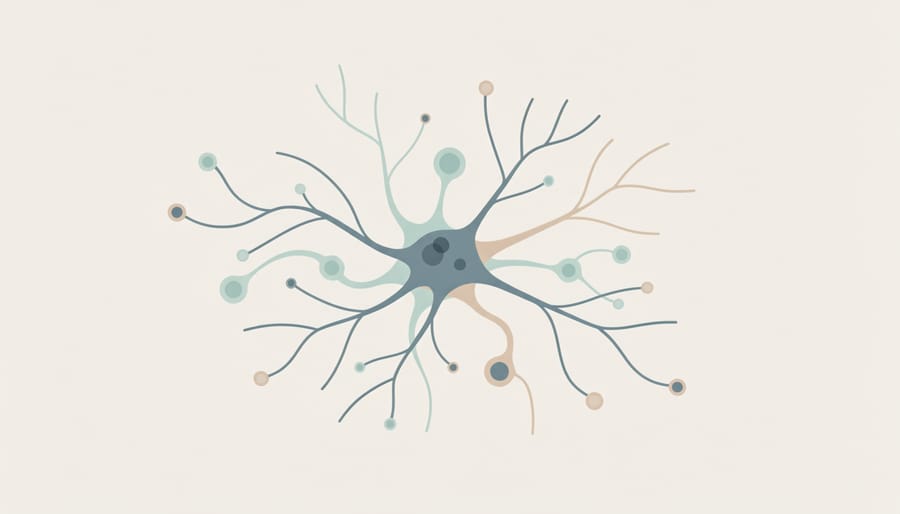
Choline serves as the direct precursor for acetylcholine, a neurotransmitter essential for memory formation, attention, and muscle control. Within cholinergic neurons, the enzyme choline acetyltransferase catalyzes the synthesis of acetylcholine from choline and acetyl-CoA. This process occurs primarily in nerve terminals, where acetylcholine is packaged into synaptic vesicles and released during neuronal signaling.
When acetylcholine binds to postsynaptic receptors, both nicotinic and muscarinic subtypes, it triggers electrical and chemical changes that transmit information between neurons. Cholinergic pathways in the hippocampus and prefrontal cortex are particularly critical for encoding new memories and executive functions. The strength and efficiency of these connections depend on adequate acetylcholine availability at synaptic junctions.
Research demonstrates that choline availability influences synaptic plasticity, the brain’s ability to strengthen or weaken neural connections based on experience. Higher acetylcholine levels enhance long-term potentiation, a cellular mechanism underlying learning and memory consolidation. Studies in animal models show that choline supplementation increases hippocampal acetylcholine release and improves performance on spatial memory tasks.
The basal forebrain cholinergic system degenerates in Alzheimer’s disease, contributing to cognitive decline. This vulnerability underscores acetylcholine’s importance in maintaining cognitive function throughout aging.
Membrane Structure and Neural Communication
Choline serves as a structural building block for two major phospholipids that compose neuronal membranes: phosphatidylcholine (PC) and sphingomyelin. PC constitutes approximately 40-50% of total membrane phospholipids in the brain, forming the bilayer matrix that defines cell boundaries and organelle compartments. This phospholipid directly influences membrane fluidity, the dynamic property allowing proteins to move laterally and cluster into functional domains.
Membrane fluidity determines how efficiently neurons can respond to signals. PC-rich membranes maintain optimal viscosity for neurotransmitter receptor mobility, enabling rapid conformational changes required for signal transduction. When choline availability is limited, cells compensate by increasing phosphatidylethanolamine synthesis, but this substitution alters membrane biophysical properties and can impair receptor clustering.
Sphingomyelin, synthesized from PC, concentrates in lipid rafts, specialized membrane microdomains that organize signaling molecules. These rafts serve as platforms where receptors, ion channels, and intracellular signaling proteins assemble into functional units. Disruptions in sphingomyelin content fragment these platforms, compromising synaptic vesicle fusion, neurotransmitter release, and downstream signal amplification. This structural role explains why adequate choline is essential for maintaining the physical infrastructure of neural communication.
Methylation and Gene Expression
Choline serves as a critical methyl donor in one-carbon metabolism through its oxidation to betaine. When dietary methionine is limited, betaine donates methyl groups to homocysteine, regenerating methionine and supporting S-adenosylmethionine (SAM) synthesis. SAM is the primary methyl donor for DNA methylation, histone modifications, and other epigenetic processes that regulate gene expression without altering DNA sequences.
These methylation reactions have profound implications for brain development and lifelong cognitive function. During prenatal and early postnatal periods, DNA methylation patterns established in neural tissue can persist throughout life, influencing neurotransmitter receptor expression, synaptic plasticity genes, and stress response pathways. Adequate choline availability during these critical windows affects the epigenetic programming of genes involved in memory formation, attention regulation, and neural plasticity.
Research on choline methylation and epigenetics has demonstrated that maternal choline status can alter offspring DNA methylation patterns in brain regions associated with learning and memory, with effects observable into adulthood. Insufficient methyl donor availability during development may lead to aberrant methylation patterns that compromise cognitive capacity, while optimal choline intake supports proper epigenetic regulation of genes critical for neuronal function and cognitive health across the lifespan.
Forms and Sources of Choline

Choline exists in multiple chemical forms, each with distinct properties affecting how the body absorbs and utilizes this nutrient for brain function. Understanding these differences matters for both research design and practical application in supporting cognitive health.
Phosphatidylcholine represents the most abundant form in foods and constitutes roughly 95% of choline in most tissues. This phospholipid contains two fatty acid chains attached to a glycerol backbone with a phosphate-choline head group. Egg yolks, soybeans, and organ meats provide rich sources. After ingestion, pancreatic enzymes partially break down phosphatidylcholine in the small intestine, releasing free choline and other metabolites that enter circulation. The liver can resynthesize phosphatidylcholine from absorbed choline or incorporate it directly into lipoproteins for transport to tissues including the brain.
Glycerophosphocholine (alpha-GPC) has gained attention in cognitive research due to its high bioavailability and efficient delivery of choline across the blood-brain barrier. This form contains choline bound to a single glycerol molecule via a phosphate group. Dairy products contain modest amounts naturally, though supplemental alpha-GPC typically derives from purified soy lecithin. Studies suggest alpha-GPC may increase plasma choline levels more effectively than other supplemental forms, making it relevant for ADHD research and investigations of acute cognitive effects.
Choline bitartrate, a salt form combining choline with two tartaric acid molecules, appears frequently in multivitamins and standalone supplements due to its stability and low cost. However, its bioavailability is lower than phospholipid forms. Much of ingested choline bitartrate undergoes bacterial metabolism in the gut to trimethylamine before absorption, potentially reducing the amount reaching systemic circulation as free choline.
Sphingomyelin, another phospholipid containing choline, occurs in dairy products and contributes to dietary choline intake. The body must enzymatically cleave sphingomyelin to release choline, a process that varies by individual digestive capacity.
CDP-choline (cytidine diphosphate-choline or citicoline) differs from other forms by providing both choline and cytidine, a pyrimidine nucleoside. This dual delivery supports both neurotransmitter synthesis and membrane phospholipid production. Research protocols often employ CDP-choline when investigating neuroprotective mechanisms distinct from simple choline supplementation.
The form consumed influences not just absorption efficiency but also metabolic fate within tissues, affecting how much reaches the brain and becomes available for acetylcholine synthesis versus membrane incorporation or other metabolic pathways.
Research Evidence: Choline and Cognitive Performance

Prenatal and Early Development Studies
Maternal choline intake during pregnancy and early postnatal periods profoundly influences offspring brain development and long-term cognitive outcomes. Studies demonstrate that choline supplementation during the third trimester, when fetal brain development accelerates, enhances processing speed, attention, and visuospatial memory in children measured at 4, 7, and 10 years of age. Research published between 2020 and 2024 shows that doubling prenatal choline intake from adequate to high levels (approximately 930 mg daily versus 480 mg daily) produces measurable improvements in information processing and sustained attention tasks.
Critical periods for choline’s developmental impact align with rapid neurogenesis, synapse formation, and myelination processes occurring primarily during the second and third trimesters through early infancy. Animal models reveal that prenatal choline availability affects hippocampal structure and function permanently, with effects persisting across the lifespan regardless of postnatal nutrition.
Long-term follow-up studies tracking children into adolescence demonstrate sustained cognitive advantages in executive function and memory performance among those whose mothers maintained higher choline intakes during pregnancy. These findings persist after controlling for socioeconomic factors, maternal education, and other nutritional variables, suggesting independent effects of prenatal choline status on neurocognitive trajectories. The durability of these benefits underscores choline’s role as a critical developmental nutrient with programming effects on brain architecture.
Adult Cognitive Function and Aging
Several longitudinal studies demonstrate associations between choline intake and cognitive outcomes in middle-aged and older adults. The Framingham Offspring Study found that higher dietary choline correlated with better performance on verbal memory tests and reduced white matter hyperintensity volume on MRI scans, suggesting protective effects on brain structure. Adults in the highest quartile of choline consumption showed cognitive performance equivalent to participants several years younger.
Intervention trials examining choline supplementation in healthy older adults have produced mixed results. A 2024 randomized controlled trial administering 1000 mg daily of CDP-choline for six months found modest improvements in episodic memory and processing speed among participants aged 60-75 with subjective cognitive complaints. However, a 2025 meta-analysis of 12 supplementation studies concluded that benefits were most consistent in adults with lower baseline choline status or existing mild cognitive impairment, while effects in cognitively normal older adults remained uncertain.
Mechanistic research suggests choline may counter age-related declines through multiple pathways: maintaining acetylcholine availability as cholinergic neurons degenerate, preserving membrane integrity in aging cells, and supporting methylation processes that become less efficient with age. Phosphatidylcholine levels decline in aging brains, potentially contributing to cognitive deterioration. Whether supplementation can meaningfully reverse these changes requires further investigation targeting specific at-risk populations.
Clinical Populations and Cognitive Disorders
Clinical trials examining choline supplementation in populations with established cognitive disorders have produced mixed results. Studies in Alzheimer’s disease patients show that while choline precursors can increase acetylcholine synthesis, clinical improvements in memory or functional status remain inconsistent. The degenerative nature of the condition and extensive neuronal loss may limit therapeutic responsiveness to choline alone.
Research in vascular dementia populations suggests modest benefits on specific cognitive domains, particularly when choline is combined with other nutrients supporting vascular health. Small trials in traumatic brain injury patients indicate potential for choline to support neuroplasticity during recovery phases, though optimal timing and dosing require further investigation.
Schizophrenia research demonstrates that CDP-choline may improve negative symptoms and cognitive deficits, potentially through effects on dopaminergic pathways beyond cholinergic mechanisms. Studies in attention disorders show variable outcomes depending on baseline choline status and genetic factors.
Current limitations include small sample sizes, heterogeneous patient populations, and inconsistent outcome measures across trials. The therapeutic window may narrow once significant neurodegeneration has occurred, suggesting prevention strategies warrant greater research investment than late-stage intervention approaches.
Genetic Variation and Individual Choline Requirements

Individual genetic variation creates substantial differences in how people metabolize choline and respond to dietary intake. Polymorphisms in several genes alter choline utilization efficiency, potentially affecting cognitive outcomes and determining personalized requirements that standard recommendations may not address adequately.
The PEMT gene (phosphatidylethanolamine N-methyltransferase) catalyzes endogenous phosphatidylcholine synthesis in the liver, representing a critical pathway for meeting choline needs without dietary sources. The rs12325817 SNP, common in certain populations, reduces PEMT activity by approximately 50%. Premenopausal women carrying this variant show increased susceptibility to choline deficiency when consuming low-choline diets because they cannot compensate through endogenous synthesis. This genetic difference may influence cognitive resilience during periods of inadequate intake, particularly during pregnancy when demands escalate.
One-carbon metabolism genes also modulate choline requirements. MTHFD1 encodes an enzyme in folate metabolism that intersects with choline pathways through methylation processes. Variants affecting MTHFD1 function can shift the metabolic burden toward choline-dependent methylation, effectively increasing choline needs to maintain adequate methyl group availability for neurotransmitter synthesis and epigenetic regulation in the brain. Similarly, CHDH (choline dehydrogenase) variants influence the conversion of choline to betaine, another methyl donor, altering how efficiently the body can use choline for methylation versus acetylcholine production.
Several key genetic variants demonstrate measurable effects on choline metabolism:
- PEMT rs12325817, reduces endogenous phosphatidylcholine synthesis capacity by approximately 50%, particularly impacting women with lower estrogen levels
- MTHFR C677T, decreases methylenetetrahydrofolate reductase activity, increasing reliance on choline-derived methyl groups for one-carbon metabolism
- CHDH rs12676, affects choline oxidation to betaine, influencing methylation capacity and homocysteine metabolism
- PEMT rs7946, associated with altered phosphatidylcholine production and potential effects on lipid metabolism in neural tissues
These genetic influences support personalized nutrition approaches where choline recommendations account for individual metabolic capacity rather than applying uniform guidelines. Advanced computational genomics tools now enable researchers to model how multiple variants interact to determine effective choline requirements for cognitive health. Machine training approaches analyze large datasets linking genetic profiles, dietary intake patterns, and cognitive outcomes to refine personalized recommendations.
Research through 2026 demonstrates that carriers of multiple risk variants show different cognitive trajectories in response to choline status compared to individuals with more efficient metabolism. This understanding opens opportunities for targeted intervention strategies, particularly in populations at higher genetic risk for cognitive decline or during critical developmental windows when choline needs peak.
Clinical and Research Applications
Choline status assessment has advanced beyond population-level recommendations to clinical tools that guide individualized interventions. Plasma choline and its metabolites, betaine, phosphatidylcholine, and trimethylamine N-oxide (TMAO), now serve as biomarkers in research protocols evaluating cognitive trajectories. Erythrocyte phosphatidylcholine concentrations provide longer-term status indicators, while urinary choline excretion reflects recent intake and metabolic efficiency. These markers enable clinicians and researchers to identify subclinical deficiency states before cognitive symptoms emerge.
Integration into precision nutrition platforms represents a significant application area. Genetic testing panels increasingly include variants in PEMT, MTHFD1, and CHDH genes, allowing a healthcare provider to stratify patients by predicted choline requirements. Women with specific PEMT polymorphisms who cannot efficiently synthesize choline endogenously receive targeted counseling on dietary sources or supplementation timing, particularly during pregnancy when cognitive programming occurs. This genomic approach mirrors broader shifts toward nutrient-gene interaction models in clinical practice.
Ongoing clinical trials are testing choline supplementation in mild cognitive impairment, with dosing protocols ranging from 500 mg to 2 grams daily depending on baseline status and genetic profile. Phase II studies examine phosphatidylcholine formulations combined with DHA for synergistic membrane support. Pharmaceutical developers are exploring choline’s role as an adjunct therapy in neurodegenerative disease management, though acetylcholinesterase inhibitors remain the primary pharmacological approach.
Collaborative research models have accelerated progress. Academic centers partner with diagnostic companies to refine metabolomic assays that capture individual variation in choline metabolism, similar to how exposures create genome chemical changes that inform risk profiles. Cross-sector consortia link genomic databases with dietary intake records and cognitive assessment batteries, building datasets necessary for machine learning algorithms that predict optimal choline intake levels. These partnerships bridge basic science discoveries with clinical implementation, addressing the translational gap that has historically slowed nutrient-based interventions.
Current Recommendations and Considerations
The Institute of Medicine established adequate intake (AI) levels for choline in 1998, setting recommendations at 550 mg/day for adult men and 425 mg/day for adult women, with increased requirements during pregnancy (450 mg/day) and lactation (550 mg/day). However, population surveys consistently show that most individuals fail to meet these levels, with average intakes typically ranging from 250 to 350 mg/day. This widespread insufficiency has prompted discussion about whether current recommendations adequately reflect optimal intakes for cognitive health, particularly given emerging evidence on genetic variation in choline requirements.
Several factors influence individual choline needs beyond age and sex. Pregnancy and lactation substantially increase demands due to fetal brain development and choline transfer through breast milk. Postmenopausal women may require higher intakes than premenopausal women because reduced estrogen decreases PEMT enzyme activity, limiting endogenous choline production. Genetic polymorphisms in PEMT, MTHFR, and other genes involved in one-carbon metabolism can increase dietary choline requirements by 50% or more in certain individuals. Additionally, folate status, methionine intake, and alcohol consumption interact with choline metabolism, affecting tissue availability.
Should choline supplements be taken with food?
Choline supplements are generally better absorbed when taken with meals containing fat, as this enhances phospholipid-bound choline absorption. Timing with food also reduces potential gastrointestinal side effects.
Are food sources of choline superior to supplements?
Food sources provide choline in various forms alongside other nutrients that support its metabolism, potentially offering advantages over isolated supplements. However, supplements can help individuals with elevated requirements or dietary restrictions meet adequate intake levels.
Does choline interact with other B vitamins?
Yes, choline works closely with folate, vitamin B12, and vitamin B6 in one-carbon metabolism. Adequate status of these vitamins can reduce choline requirements, while deficiencies may increase them.
Supplementation appears safe at recommended doses, with the tolerable upper intake level set at 3,500 mg/day for adults based primarily on fishy body odor from trimethylamine formation. Doses exceeding this threshold may cause hypotension, sweating, or cholinergic side effects in sensitive individuals. Current research gaps include optimal intake levels for cognitive protection across different life stages, biomarker thresholds that indicate inadequacy before clinical signs appear, and whether targeted supplementation based on genetic profile improves cognitive outcomes beyond population-wide recommendations.
Types of Choline
Choline exists in several distinct chemical forms, each with different properties affecting absorption, metabolism, and cognitive applications. Understanding these forms helps researchers and clinicians select appropriate sources for specific interventions.
Free choline circulates in blood and crosses the blood-brain barrier directly, but dietary sources provide limited amounts in this form. Most dietary choline appears as phosphatidylcholinethe predominant form in eggs, meat, and soybeans. This phospholipid requires enzymatic breakdown before absorption, yet it delivers substantial choline per serving and supports both neurotransmitter synthesis and membrane structure.
Glycerophosphocholine (alpha-GPC) and cytidine diphosphate-choline (CDP-choline or citicoline) represent bioactive intermediates used extensively in cognitive research. Both cross the blood-brain barrier efficiently and directly supply precursors for acetylcholine and phospholipid synthesis. Clinical trials frequently employ these forms due to superior bioavailability compared to simpler salts.
Choline bitartrate and choline chloride serve as economical supplement forms, though they deliver lower bioavailable choline per gram than phospholipid-bound variants. Sphingomyelinfound in dairy and eggs, contributes choline after intestinal hydrolysis while also providing sphingoid bases important for neuronal signaling.
Betaine, while technically a choline metabolite rather than a form, functions as both a methyl donor and osmolyte, indirectly supporting choline-dependent pathways in the brain.
The current evidence base through 2026 demonstrates that choline plays a measurable and mechanistically grounded role in cognitive function throughout human development and aging. Research has established clear pathways connecting choline metabolism to acetylcholine synthesis, membrane phospholipid formation, and methylation processes that affect neural structure and signaling. Clinical studies show associations between adequate choline intake and cognitive outcomes, particularly during critical developmental windows and in aging populations.
However, significant research gaps remain. The field needs larger, longer-term trials with standardized cognitive assessment protocols to clarify dose-response relationships across diverse populations. Most intervention studies to date have been limited by small sample sizes, short duration, or heterogeneous methodologies that complicate meta-analysis. Questions persist regarding optimal intake levels for different life stages, the comparative efficacy of various choline forms for cognitive endpoints, and the clinical significance of observed effects in real-world settings.
The integration of genomics offers substantial promise for advancing this field. Genetic variation in choline metabolism pathways creates individual differences in requirements and response, making personalized nutrition approaches particularly relevant. Collaborative research that combines nutritional intervention with genomic profiling, neuroimaging, and longitudinal cognitive assessment can identify which individuals benefit most from choline optimization and at what intake levels.
Moving forward, interdisciplinary partnerships between nutritional scientists, neuroscientists, geneticists, and clinicians will be essential. Sustained research funding that supports both mechanistic studies and translational applications can bridge current knowledge gaps. Standardizing biomarkers of choline status, refining assessment methods, and developing precision nutrition frameworks will enable more targeted interventions. The ultimate goal remains translating mechanistic understanding into actionable strategies that preserve and enhance cognitive health across the lifespan through evidence-based, individually tailored approaches.