

Osteoarthritis gene therapy is advancing from early proof-of-concept studies into multi-site clinical evaluations, with several approaches now testing the durability of pain relief and structural protection in human joints. The therapeutic strategy delivers genetic material directly into affected joints to produce anti-inflammatory proteins, growth factors, or cartilage-protective molecules locally, aiming to modify disease progression rather than simply manage symptoms. This localized gene therapy development offers a potential paradigm shift for a condition affecting over 500 million people worldwide, where current treatments remain palliative and joint replacement surgery often becomes the only option for advanced disease.
The field has matured considerably over the past five years. Early-stage trials testing adeno-associated viral vectors carrying IL-1 receptor antagonist genes, TGF-beta variants, and insulin-like growth factor 1 have generated preliminary safety data and biological signals supporting intra-articular gene transfer as a viable platform. Investigators are now addressing critical questions about optimal vector selection, dosing regimens, patient stratification, and whether single-injection approaches can deliver multi-year therapeutic benefits. Regulatory frameworks for orthopedic gene therapies continue to evolve, with particular attention to defining appropriate clinical endpoints that capture both symptom relief and structural outcomes.
For researchers and healthcare stakeholders, understanding which mechanisms show translational promise, what manufacturing and delivery challenges remain, and where the evidence base currently stands will be essential as this field moves toward potential clinical implementation. The following analysis examines recent progress, identifies credible developments backed by published data, and outlines the key factors that will determine whether osteoarthritis gene therapy transitions from experimental intervention to standard care option.
The Therapeutic Challenge: Why Osteoarthritis Demands New Genetic Approaches
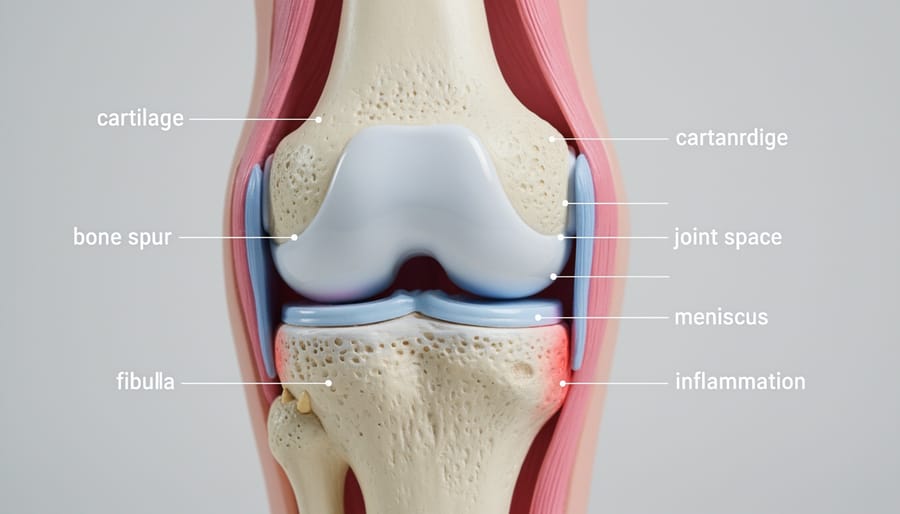
Osteoarthritis represents a disease burden affecting over 500 million people globally, yet therapeutic options remain limited to symptom management rather than disease modification. Current treatments, analgesics, non-steroidal anti-inflammatory drugs, corticosteroid injections, and hyaluronic acid supplementation, provide temporary relief but do not halt cartilage degradation or address the underlying inflammatory and metabolic dysregulation driving joint destruction. Total joint replacement becomes the endpoint for many patients, creating substantial healthcare costs and morbidity in aging populations.
The pathophysiology of osteoarthritis involves chronic low-grade inflammation in synovial tissue, progressive loss of articular cartilage, subchondral bone remodeling, and altered joint mechanics. This complex, localized disease process requires sustained therapeutic intervention within the affected joint microenvironment. Systemic biologics targeting inflammatory cytokines show promise but face challenges of systemic exposure, limited intra-articular concentrations after systemic dosing, and the need for repeated administration to maintain therapeutic levels.
Gene therapy approaches for osteoarthritis exploit the anatomical isolation of joint spaces, enabling direct intra-articular vector delivery to target cells, chondrocytes, synoviocytes, and meniscal cells, without systemic biodistribution. Transduced cells become biofactories producing therapeutic proteins such as anti-inflammatory cytokines, growth factors promoting cartilage matrix synthesis, or inhibitors of catabolic enzymes that degrade cartilage. This strategy provides continuous local production at therapeutic concentrations for months to years from a single administration, fundamentally different from pharmacologic interventions requiring repeated dosing.
The anatomical containment also simplifies safety monitoring and offers potential retreatment options if needed. Researchers recognize that effective disease modification in osteoarthritis requires altering the joint microenvironment over sustained periods, precisely the advantage conferred by localized gene transfer.
Key Developments in Osteoarthritis Gene Therapy Research
1. Adeno-Associated Viral Vector Refinements for Joint Delivery
Refining AAV vectors for intra-articular delivery represents a critical frontier in translating osteoarthritis gene therapy from bench to bedside. Researchers have focused on engineering vectors that can efficiently transduce the specific cell types within joint tissues, chondrocytes embedded in avascular cartilage and synovial cells lining the joint capsule, while minimizing systemic exposure and immune recognition.
Recent preclinical studies have demonstrated that certain AAV serotypes exhibit preferential tropism for joint tissues following direct injection into the synovial space. Published research in animal models shows that modified capsids can achieve substantially higher transduction rates in target cells compared to earlier-generation vectors, with transgene expression persisting for months in some studies. The challenge lies in balancing transduction efficiency with payload capacity, as therapeutic genes and regulatory elements must fit within the vector’s limited packaging constraints.
Investigators are systematically evaluating multiple vector characteristics to optimize joint delivery:
- Serotype selectivity for chondrocyte and synovial cell tropism
- Capsid modifications that reduce binding to neutralizing antibodies
- Payload capacity optimization for therapeutic gene cassettes and regulatory elements
- Durability of transgene expression in the joint microenvironment
Capsid engineering efforts have yielded variants with reduced immunogenicity profiles, addressing a key obstacle given that a significant proportion of the population carries pre-existing antibodies against common wild-type AAV serotypes. Data from preclinical models indicate that these engineered capsids can evade neutralization while maintaining robust transduction, though translating these findings to human joints requires careful validation.
The localized delivery route offers distinct advantages: high concentrations of therapeutic protein can be achieved within the joint space without the systemic exposure that drives dose-limiting toxicity in other gene therapy applications. Ongoing work seeks to refine vector design further, balancing transgene expression levels with safety considerations and manufacturing feasibility.
2. Therapeutic Target Gene Strategies: Anti-Inflammatory and Regenerative Pathways
Gene therapy strategies for osteoarthritis target two complementary pathways: blocking inflammatory mediators that drive disease progression and delivering regenerative factors that promote cartilage repair. This dual approach reflects the multifactorial nature of joint degeneration and the potential for localized gene delivery to address both processes simultaneously.
Anti-inflammatory gene constructs center on neutralizing cytokines that amplify cartilage breakdown and synovial inflammation. IL-1 receptor antagonist (IL-1Ra) constructs have generated considerable preclinical interest because IL-1β plays a central role in osteoarthritis pathogenesis, stimulating matrix metalloproteinases and suppressing proteoglycan synthesis. Preclinical models have demonstrated that sustained intraarticular expression of IL-1Ra can reduce synovial inflammation and slow cartilage degradation. Intraarticular IL-1Ra gene therapy has shown biological plausibility in early-stage investigations, with evidence of transgene expression and local anti-inflammatory effects in affected joints. Similarly, anti-TNF constructs aim to block tumor necrosis factor signaling without the systemic exposure inherent in biologic therapies, potentially reducing infection risk and immunogenicity.
Regenerative gene candidates focus on stimulating chondrocyte activity and extracellular matrix production. Insulin-like growth factor 1 (IGF-1) enhances proteoglycan synthesis and chondrocyte proliferation, offering a mechanistic rationale for slowing or reversing cartilage loss. Fibroblast growth factor 18 (FGF-18) targets cartilage anabolism by activating pathways involved in matrix deposition and chondrocyte differentiation. Bone morphogenetic proteins and transforming growth factor-beta superfamily members have also been explored for their chondrogenic potential, though concerns about ectopic bone formation and fibrosis require careful vector design and dosing.
Combination strategies pairing anti-inflammatory and anabolic genes represent a logical evolution, addressing both disease drivers simultaneously within the joint microenvironment. Researchers continue to refine which gene pairings yield synergistic benefit without triggering counterproductive immune responses or off-target effects.
3. Clinical Translation Progress and Regulatory Pathway Considerations

As of 2026, osteoarthritis gene therapy remains primarily in preclinical and early clinical investigation, with the pathway from laboratory to bedside reflecting both the promise and complexity of intra-articular genetic interventions. Most candidate therapies are currently in preclinical optimization or early-phase human studies designed to establish safety, vector biodistribution, and preliminary signals of biological activity. These initial trials typically enroll small cohorts to assess tolerability of intra-articular vector delivery and to monitor for adverse events such as joint inflammation, immune responses to viral capsids, or off-target transgene expression. The clinical development landscape is characterized by incremental progress: researchers are working to define appropriate patient populations, optimal dosing regimens, and durable endpoints that capture both symptomatic improvement and disease modification in a chronic, slowly progressive condition.
The regulatory pathway for these therapies involves close engagement with agencies such as the FDA and EMA early in development, often through pre-IND meetings and ongoing dialogue to align on study design, endpoints, and risk mitigation strategies. Because osteoarthritis gene therapy represents a novel modality for a non-life-threatening but highly prevalent condition, regulatory bodies emphasize comprehensive risk-benefit assessment, including potential for systemic exposure from the joint compartment and durability of expression relative to therapeutic need. Collaborative frameworks are emerging among academic research centers, biotechnology companies, and regulatory authorities to harmonize approaches to vector characterization, potency assays, and post-treatment monitoring. These partnerships also focus on infrastructure challenges such as manufacturing scalability, consistency of vector batches, and establishing reference standards for comparing different constructs across development programs. The shared goal is a transparent, evidence-based pathway that balances innovation with patient safety and positions osteoarthritis gene therapy for responsible clinical translation if efficacy can be demonstrated convincingly in well-controlled trials.
Why These Developments Matter for Healthcare and Research Communities
The progress in osteoarthritis gene therapy carries substantial implications across multiple stakeholder groups, reshaping how we conceptualize treatment for one of the world’s most prevalent chronic conditions. For clinicians managing the estimated 500 million people worldwide affected by osteoarthritis, these developments represent a potential shift from symptom palliation to disease modification. Current standard care, nonsteroidal anti-inflammatory drugs, corticosteroid injections, physical therapy, and eventual joint replacement, addresses pain and inflammation but does not alter the degenerative trajectory. Gene therapy offers the prospect of localized, sustained delivery of therapeutic proteins directly to affected joints, potentially slowing or halting cartilage degradation while reducing the systemic side effects associated with long-term oral or parenteral medications.
For researchers, these advances validate years of mechanistic investigation and open new experimental directions. The refinement of viral vectors and delivery techniques provides tools to test hypotheses about disease pathways in ways that small molecules and biologics cannot replicate. Understanding which gene targets most effectively balance anti-inflammatory and regenerative effects will inform not only osteoarthritis therapy but also approaches to other degenerative joint conditions.
From a healthcare systems perspective, successful translation of osteoarthritis gene therapy could significantly reduce the burden of joint replacement surgeries, postoperative care, and long-term pharmaceutical costs. For aging populations globally, particularly in regions with limited surgical infrastructure, an effective disease-modifying intervention administered via intra-articular injection represents improved access and quality of life. The challenges ahead, establishing safety over years, determining optimal patient populations, and ensuring equitable distribution, require coordinated effort among all stakeholders to realize this therapeutic potential responsibly.
What to Watch: Next Steps and Open Questions

As osteoarthritis gene therapy transitions from proof-of-concept studies to broader clinical evaluation, several critical areas demand close attention from researchers, clinicians, and regulatory stakeholders. These open questions will shape whether laboratory promise translates into accessible, durable treatments for patients.
Durability of transgene expression remains a central concern. While early-phase human studies have demonstrated detectable protein production in synovial fluid for months following intra-articular delivery, multi-year follow-up data are scarce. Understanding whether therapeutic effect wanes over time, and whether repeat administration is feasible or necessary, will determine practical utility in chronic disease management. Long-term safety monitoring protocols must capture not only immediate adverse events but also delayed immune responses, off-target effects, and the cumulative impact of sustained local protein production on joint homeostasis.
Patient selection criteria present another unresolved challenge. Identifying which individuals stand to benefit most, based on disease stage, joint anatomy, inflammatory phenotype, or even genetic risk testing for treatment response, requires biomarker development and prospective validation. The field must also address scalability of manufacturing: producing viral vectors at clinical-grade quality for widespread use demands infrastructure investment and process standardization that extend beyond small-batch academic production.
Priority watch areas for the coming phase include:
- Accumulation of five-year and ten-year safety and efficacy data from ongoing cohorts
- Optimization of vector dose, administration technique, and potential for repeat dosing
- Development and validation of predictive biomarkers for treatment response
- Health economics modeling to assess cost-effectiveness relative to total joint replacement and biologics
- Ethical frameworks ensuring equitable access as therapies advance toward approval
These questions intersect with broader future gene therapy challenges, including regulatory harmonization across jurisdictions and the need for standardized outcome measures. Multi-center collaborative studies will be essential to generate the robust evidence base required for regulatory approval and clinical adoption, moving osteoarthritis gene therapy from experimental intervention to established treatment option.
Collaborative Opportunities and Stakeholder Roles
Advancing osteoarthritis gene therapy from preclinical investigation to clinical reality requires coordinated effort across multiple stakeholder groups. Researchers in academic centers and industry labs contribute foundational mechanistic insights, vector engineering innovations, and preclinical efficacy data that inform therapeutic design. Clinicians, orthopedic surgeons, rheumatologists, and physiatrists, provide essential perspective on patient selection criteria, delivery techniques, and outcome measures that reflect meaningful functional improvement. Their involvement early in development helps ensure therapies address real-world clinical needs.
Industry partners bring expertise in vector manufacturing, regulatory strategy, and scalable production. Collaboration between academic and commercial entities accelerates translation by combining scientific rigor with process development capacity. Patient advocacy organizations play a crucial role by representing patient priorities, supporting trial recruitment, and communicating emerging evidence to affected communities. Their input shapes endpoints that matter to those living with osteoarthritis.
Funding bodies, government agencies, foundations, and philanthropic organizations, enable high-risk translational research and multi-site studies that individual institutions cannot undertake alone. Critically, all stakeholders benefit from committing to data sharing through registries and repositories, adopting standardized protocols for delivery and assessment, and participating in consortia that pool expertise. This interdisciplinary collaboration mitigates duplication, enhances reproducibility, and establishes the evidence base regulators and payers require. Responsible translation of osteoarthritis gene therapy depends on stakeholders working not in parallel but in partnership, aligning scientific innovation with clinical pragmatism and patient need.
Frequently Asked Questions
How does intra-articular gene therapy for osteoarthritis work?
A viral vector, typically adeno-associated virus, is injected directly into the affected joint where it delivers therapeutic genes to local cells, chondrocytes, synoviocytes, or both. These cells then produce the desired protein, such as an anti-inflammatory cytokine or growth factor, creating sustained local therapeutic effect without systemic exposure.
How is this different from current biologic drugs for osteoarthritis?
Unlike systemic biologics administered intravenously or subcutaneously, gene therapy delivers the genetic instructions for local, continuous protein production within the joint itself. This approach confines therapeutic activity to the disease site, potentially reducing systemic exposure and the need for repeated dosing that characterizes conventional biologics.
What are the main safety considerations specific to gene therapy in joints?
Key concerns include immune responses to the viral vector or the expressed protein, potential off-target transduction beyond the joint, durability and controllability of gene expression over time, and long-term consequences of persistent transgene activity. Monitoring protocols must assess both local joint health and systemic safety markers over extended periods.
Which patients might be candidates for osteoarthritis gene therapy?
Early candidates likely include individuals with moderate osteoarthritis who have not responded adequately to conservative treatments but wish to delay or avoid joint replacement, particularly those with localized disease in accessible joints like the knee. Patient selection criteria remain under development as clinical data accumulate.
What is the realistic timeline for broader clinical access?
Gene therapies for osteoarthritis remain in investigational stages as of 2026, with most approaches in preclinical development or early-phase human studies. Widespread clinical availability depends on demonstration of sustained efficacy and acceptable safety across larger, longer-duration trials, regulatory approval processes, and establishment of manufacturing and delivery infrastructure, timelines that typically span years rather than months.
These questions reflect the primary concerns raised by clinicians and researchers evaluating gene therapy as a potential treatment modality for osteoarthritis. Understanding the mechanism, comparative advantages, safety profile, patient selection criteria, and development timeline helps stakeholders set realistic expectations and engage meaningfully with ongoing research. The collaborative nature of advancing these therapies means that informed dialogue among researchers, regulators, clinicians, and patient communities remains essential as the field progresses.
Osteoarthritis gene therapy stands at a pivotal juncture within the broader landscape of gene therapy developments. The progress reviewed here, vector optimization for joint-specific delivery, therapeutic target refinement addressing both inflammation and regeneration, and advancing clinical translation frameworks, reflects genuine momentum in addressing a condition that affects millions globally. Yet this is early-stage science, and the gap between preclinical promise and routine clinical use remains substantial.
Realizing that potential demands sustained, collaborative effort. Researchers must continue refining vectors and targets through rigorous preclinical models. Clinicians need frameworks for identifying candidate patients and monitoring outcomes long-term. Industry partners face manufacturing scalability challenges. Regulatory bodies require robust safety and efficacy data to guide approval pathways. Patient advocacy groups play a crucial role in shaping research priorities and ensuring accessible translation.
The principles underlying osteoarthritis gene therapy, localized delivery, sustained therapeutic protein expression, disease modification rather than symptom management, extend well beyond this single application. Just as techniques from genomic diagnostic workflow development inform how we identify appropriate candidates, and insights into how genetic testing works shape patient selection strategies, progress in osteoarthritis informs other musculoskeletal and localized gene therapy efforts.
The work ahead is significant, but the convergence of improved vectors, better understanding of joint biology, and maturing regulatory pathways creates genuine opportunity. Advancing responsibly from bench to bedside requires the research and healthcare communities to maintain scientific rigor, share data transparently, and prioritize patient safety above speed. That collaborative commitment will determine whether osteoarthritis gene therapy fulfills its clinical promise.