Antibiotic resistance is the ability of bacteria to survive exposure to drugs designed to kill them or stop their growth. It arises through specific, well-characterized biological mechanisms: efflux pumps that actively eject antibiotics from the cell, enzymes that chemically inactivate the drug, and modifications to the antibiotic’s molecular target that prevent binding. Resistance genes then travel between bacteria through horizontal gene transfer, using conjugation, transformation, and transduction, which lets a single adaptive change spread far beyond the cell where it first appeared.
The clinical stakes are measurable. The CDC reports more than 9.3 million drug-resistant infections in the United States each year, with more than 39,000 deaths. Its 2026 Antimicrobial Resistance Threats Report puts the totals at 9.7 million infections and 50,800 deaths once C. diff is included. Behind those figures sits a molecular story that researchers, clinicians, and public health partners must read the same way if they are to act on it together.
This article explains how each resistance mechanism works, how resistance determinants move through bacterial populations, and how that understanding shapes diagnostics, surveillance, and treatment decisions in healthcare settings. We also address the ethical dimensions of stewardship and shared responsibility, because slowing resistance depends as much on collaboration across disciplines as on any single technical advance.
What Antibiotic Resistance Means: Defining the Problem
Antibiotic resistance is the ability of bacteria to survive exposure to drugs that once killed them or stopped their growth. It sits inside a larger category. Antimicrobial resistance (AMR) occurs when bacteria, viruses, fungi, and parasites no longer respond to antimicrobial medicines, so antibiotic resistance is the bacterial branch of that wider problem. The CDC describes the same idea in plain terms: germs develop the ability to defeat the drugs designed to kill them.
A few terms recur throughout this article, and readers from different disciplines tend to use them differently, so it helps to pin them down:
- Antimicrobial resistance
- The loss of response to antimicrobial medicines in bacteria, viruses, fungi, or parasites, which allows infections to persist despite treatment.
- Intrinsic resistance
- Resistance that is an inherent feature of a species, for example because it lacks the drug’s target or has a structure that blocks drug entry.
- Acquired resistance
- Resistance gained by a previously susceptible strain, either through mutation of its own DNA or through acquisition of resistance genes from other bacteria.
- Selective pressure
- Any environmental condition, including antibiotic exposure, that favors the survival and reproduction of organisms carrying a protective trait.
- Resistance gene
- A gene encoding a function, such as an efflux pump or an inactivating enzyme, that reduces the effect of an antibiotic.
- Resistome
- The full collection of resistance genes in a bacterial genome, a microbial community, or an environment.
The intrinsic versus acquired distinction matters in practice. Some organisms are never susceptible to a given drug class, which is why clinicians choose agents based on likely species. Acquired resistance is the more dynamic concern, because a population that was treatable last year may carry resistance determinants today.
It is also worth being precise about what is resistant. Bacteria are resistant, not patients. A person does not become resistant; a person’s infection may be caused by organisms that are. Resistance is an evolutionary outcome of selective pressure: when an antibiotic eliminates susceptible cells, any variant that survives has room to multiply. Seeing resistance this way keeps the focus on microbial populations, ecosystems, and drug-use patterns rather than on individual blame.
How Antibiotic Resistance Develops and Why It Matters Clinically
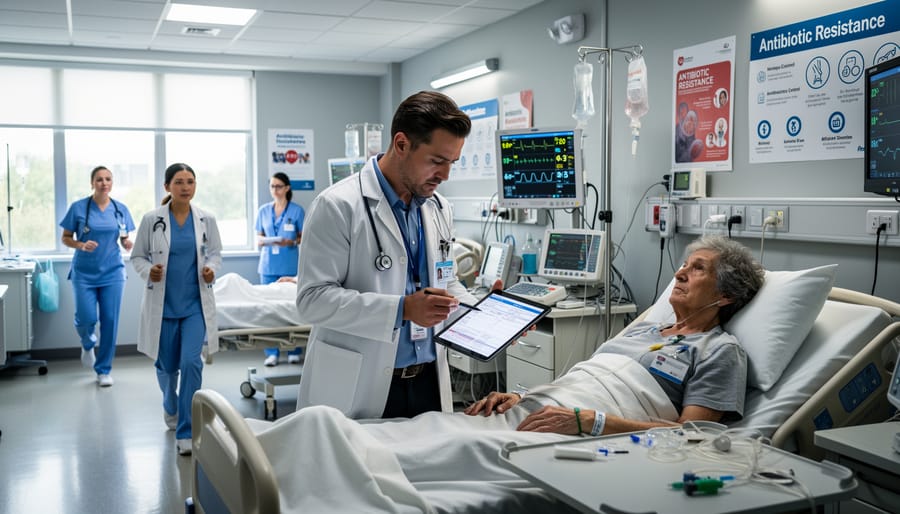
Antibiotic resistance develops through a straightforward evolutionary logic. Any bacterial population contains variation, and when an antibiotic is applied, susceptible cells die while rare variants with a protective mutation or acquired gene survive. Those survivors then expand into the space the susceptible cells vacated. The selective pressure comes from the drug exposure itself, not from the patient, which is why resistance can emerge even when a prescription is used exactly as intended.
At the population level, use patterns determine how much pressure is applied and where. Antibiotic exposure in human medicine, in agriculture, and in the wider environment all contribute to selection, and resistant bacteria and their genes do not respect those boundaries. Inappropriate or unnecessary prescribing, incomplete courses, and drug residues entering soil and water all widen the opportunities for resistant variants to be favored. In healthcare settings, dense populations of vulnerable patients and frequent antibiotic use create conditions where resistant strains persist, which is one reason hospital infection prevention remains central to limiting spread. Well-characterized examples such as MRSA resistance show how a resistance trait, once established, can circulate widely within and between care settings.
The clinical consequences are substantial. According to the CDC, more than 9.3 million drug-resistant infections occur in the United States each year, and more than 39,000 people die as a result. The agency’s 2026 Antimicrobial Resistance Threats Report reaches 9.7 million infections and 50,800 deaths when C. diff is added to the count. These CDC burden estimates describe the national scale of the problem, though the sources reviewed here do not resolve which specific pathogens account for these totals, so we do not attribute the burden to particular organisms.
For clinicians, resistant infections can mean fewer effective treatment options, longer illness, and more complex care decisions. For researchers and funders, the numbers underline why understanding the underlying mechanisms is a practical priority, not only an academic one.
How Bacteria Defeat Antibiotics: The Core Resistance Mechanisms
Efflux Pumps and Reduced Permeability: Keeping the Drug Out
Efflux pumps are membrane-spanning transport systems that actively eject antibiotics from the cell, so the drug never accumulates to a concentration that can inhibit its target. Many pumps are energy-dependent and recognize chemically diverse substrates, which means a single pump can export several unrelated drug classes at once. In Gram-negative bacteria, tripartite assemblies span both the inner and outer membranes, moving compounds directly out of the cell rather than into the periplasm.
Reduced permeability works from the opposite direction, limiting how much drug enters in the first place. The Gram-negative outer membrane is already a selective barrier, and many hydrophilic antibiotics depend on porin channels to cross it. Mutations that reduce porin expression, or alter channel structure, narrow this entry route and lower intracellular drug levels.
The two strategies often act together, and their regulation matters as much as their existence. Because pump genes and porin genes are frequently controlled by shared regulators, one mutation in a regulatory gene can simultaneously upregulate efflux and suppress porin production. The result is multidrug resistance arising from a single regulatory change, which is a signature worth looking for in resistance genomics.
Enzymatic Drug Inactivation
Some of the most effective resistance strategies involve destroying the drug outright. Bacteria can produce enzymes that chemically modify or degrade an antibiotic before it ever reaches its target, so the compound is neutralized while the cell stays intact. These enzymes may cleave critical bonds, or they may add chemical groups, such as acetyl, phosphate, or adenyl moieties, that prevent the drug from binding.
Beta-lactamases are the best-characterized example. They hydrolyze the beta-lactam ring found in penicillins, cephalosporins, and related agents, destroying the structural feature responsible for antibacterial activity. Because the ring is essential to how these drugs inhibit cell wall synthesis, even a small amount of enzyme can substantially blunt treatment, particularly when the gene is carried on a mobile element.
This dependence on a defined enzymatic reaction is also what makes these proteins tractable targets. Their active sites are well mapped, so researchers can design inhibitors that bind the enzyme and protect the partner antibiotic. Pairing an antibiotic with a beta-lactamase inhibitor is an established combination strategy, one that benefits from structural biologists, medicinal chemists, and clinicians working together.
Target Modification and Bypass Pathways
Target modification is among the most direct ways bacteria defeat a drug: they alter the binding site itself so the antibiotic no longer engages it effectively. This can happen through point mutations in the gene encoding the target, such as changes in DNA gyrase that reduce fluoroquinolone binding or in the ribosomal RNA that weaken the action of macrolides. It can also occur through enzymatic modification, for example methylation of a ribosomal residue that blocks drug access while preserving the ribosome’s essential function.
Bypass pathways take a different route. Instead of changing the original target, the cell acquires an alternative that performs the same job but is insensitive to the drug. A well-characterized case is the acquisition of a low-affinity penicillin-binding protein that continues building the cell wall even when the native proteins are inhibited.
For genomics researchers, this distinction matters. Point mutations are readily detectable through sequencing because a single nucleotide change can be compared against a reference genome and curated resistance databases. Bypass genes are typically acquired horizontally, so detection depends on identifying the presence of an entire gene rather than a substitution.
Biofilms and Tolerance: Survival Without Classic Resistance
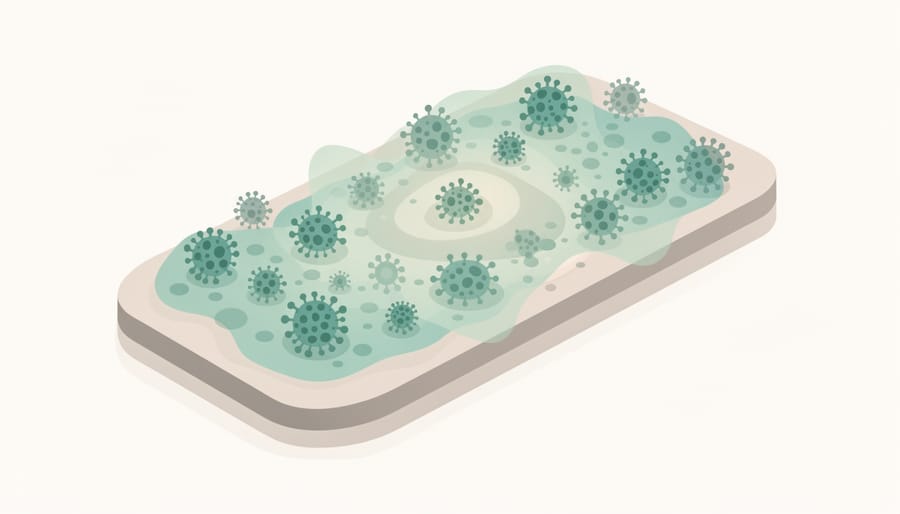
Resistance is not the only way bacteria survive antibiotics. Resistance is heritable and typically raises the minimum inhibitory concentration (MIC), so the organism grows at drug levels that would normally stop it. Tolerance and persistence are different. Tolerant populations survive a lethal dose for longer without any change in MIC, and persisters are a small, transiently dormant subpopulation that withstands killing and then resumes growth once the drug is removed. Because nothing in the genome has changed, the regrowing population remains susceptible.
Biofilms magnify this problem. Cells embedded in a self-produced extracellular matrix experience limited drug penetration, nutrient and oxygen gradients, and heterogeneous metabolic states, which together favor slow-growing or dormant cells that many antibiotics kill poorly. This helps explain why biofilm-associated infections, such as those on implanted devices, can relapse after apparent clinical response.
The laboratory implications are significant. Standard susceptibility testing assesses planktonic growth and may report an isolate as susceptible while the same organism survives treatment in a biofilm. For researchers and clinicians, this gap argues for collaboration between microbiologists and clinical teams, and for assays that capture tolerance as well as conventional resistance.
How Bacteria Spread Resistance Genes

Resistance does not travel only from parent cell to daughter cell. Bacteria also pass genes sideways to unrelated neighbors, sometimes across species boundaries, and this lateral movement is why resistance can appear in a population almost overnight. Horizontal gene transfer is the umbrella term, and it runs through three main routes: conjugation, transformation, and transduction.
Conjugation is the most direct. A donor cell builds a physical bridge to a recipient and copies DNA across, usually a plasmid, which is a small circular molecule that replicates independently of the chromosome. Many plasmids carry the machinery needed to trigger their own transfer, so a single resistant cell can arm an entire community. Transformation works differently: a competent bacterium takes up free DNA released by dead cells in its surroundings and, if the fragment recombines into its genome, inherits whatever traits it encodes. Transduction relies on bacteriophages, viruses that infect bacteria. During assembly, a phage occasionally packages host DNA instead of its own and delivers that fragment to the next cell it infects.
What makes these routes so consequential is the cargo. Mobile genetic elements such as transposons, which hop between locations in a genome, and integrons, which capture and arrange gene cassettes, let bacteria stack multiple resistance determinants onto one plasmid. A single conjugation event can therefore confer resistance to several drug classes at once. This assembly process helps explain how a single plasmid-borne element can undo several therapeutic options simultaneously.
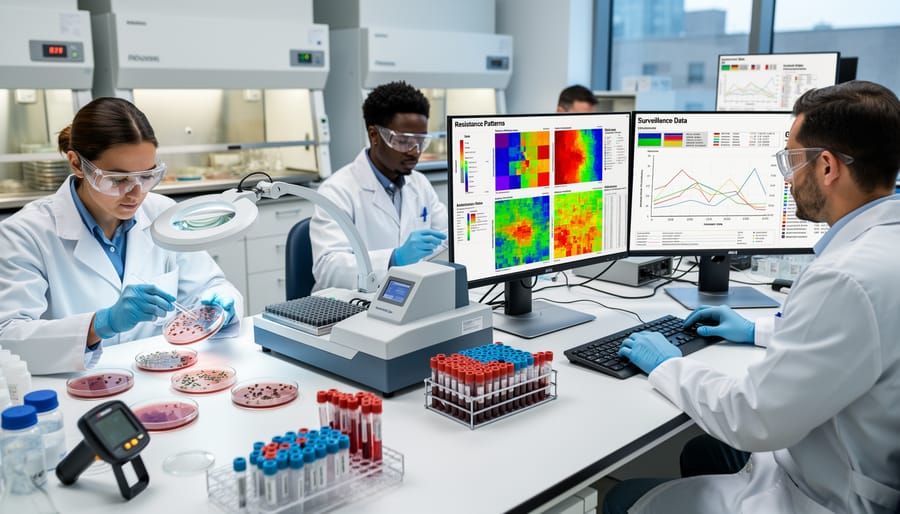
That is also why resistance is as much a genomic-epidemiology problem as a microbiological one. Tracking a resistant infection means following genes and the plasmids carrying them, not only following a species or a strain. A gene may surface in unrelated bacteria across different patients, wards, or countries, which cannot be resolved by culture alone. Sequencing makes the traffic visible, and a well-designed genomic workflow can link plasmid backbones and resistance cassettes across isolates to reveal transmission routes.
Computational approaches extend this further. Models that use genomic prediction principles can estimate resistance phenotypes from sequence data, and machine learning can help flag emerging plasmid-gene combinations before they spread widely. These tools are only as strong as the collaboration behind them, since clinicians, microbiologists, and bioinformaticians must share data and interpret it together.
How Resistance Mechanisms Inform Genomics, Diagnostics, and Therapeutics
Knowing how bacteria resist drugs is not only an academic exercise. It shapes how we track, detect, and treat resistant infections. The CDC reports more than 9.3 million drug-resistant infections and more than 39,000 deaths each year in the United States, which makes translating mechanistic insight into clinical tools a practical priority. The main applications include:
- Genomic surveillance that uses whole-genome sequencing to trace outbreaks and monitor resistance genes across settings.
- Resistance prediction from sequence data, drawing on curated resistance-gene databases.
- Rapid molecular diagnostics that detect known resistance determinants faster than culture-based testing.
- Inhibitor-based combination therapy, pairing an antibiotic with a beta-lactamase or efflux pump inhibitor.
- Stewardship guidance informed by local and regional resistance data.
Sequencing is the common thread. Whole-genome data can show whether two patient isolates share a resistance plasmid, which helps infection-control teams distinguish a true transmission event from coincidence. Resistance-gene databases let laboratories annotate those genomes consistently. Genotype-to-phenotype prediction has clear limits, however. A detected gene does not always mean clinical resistance, because expression levels, regulatory mutations, and efflux activity can all shift the outcome, while novel mechanisms absent from a database will simply be missed. Sequence-based predictions therefore complement, rather than replace, phenotypic susceptibility testing.
The mechanistic picture also guides therapeutics. Because beta-lactamases chemically inactivate a drug, pairing a beta-lactam with an enzyme inhibitor can restore its activity. Efflux pump inhibitors follow similar logic, though they remain harder to develop. Stewardship programs then use resistance surveillance to refine empiric prescribing, matching therapy to what is actually circulating locally.
This work succeeds only through collaboration. Clinicians supply patient context and outcomes, microbiologists validate phenotypes, computational biologists build and curate prediction tools, and public health agencies connect local findings to national and global trends. Gaps between these groups tend to be where signals get lost.
Ethical considerations deserve equal weight. Sequencing and rapid diagnostics are unevenly available, and resistance does not respect borders, so tools concentrated in well-resourced settings leave blind spots that affect everyone. Data sharing improves surveillance, yet it must be balanced against patient privacy through appropriate consent, de-identification, and governance. Equitable access, responsible data practices, and international cooperation are as essential to countering resistance as the science itself.
Frequently Asked Questions About Antibiotic Resistance Mechanisms
How does antimicrobial resistance happen?
Antimicrobial resistance occurs when germs such as bacteria and fungi develop the ability to defeat the drugs designed to kill them. It arises when exposure to an antimicrobial favors variants that survive, which then multiply and pass their resistance traits on.
What are the main mechanisms of antibiotic resistance?
Bacteria resist antibiotics by pumping the drug out of the cell through efflux pumps, limiting how much drug enters, chemically inactivating it with enzymes, or altering the target the drug is meant to bind. Each strategy reduces the effective drug activity at its site of action.
How do bacteria spread resistance genes?
Resistant bacteria share genes through horizontal gene transfer, using conjugation, transformation, and transduction. This lets resistance move between cells, and sometimes between species, rather than only down a single lineage.
What is the difference between resistance and tolerance?
Resistance is a heritable ability to grow despite the presence of a drug, usually detectable as a change in susceptibility testing. Tolerance and persistence describe survival of a drug exposure without that heritable change, which can still contribute to treatment failure and relapse.
For readers weighing the scale of the problem, the CDC reports more than 9.3 million drug-resistant infections and more than 39,000 deaths each year in the United States. Its 2026 Antimicrobial Resistance Threats Report reaches 9.7 million infections and 50,800 deaths when C. diff is added. These figures underscore why mechanism-level understanding, paired with genomic surveillance and collaboration across clinical, laboratory, and public health teams, remains a priority.
Antibiotic resistance rests on a small set of recurring strategies. Bacteria pump drugs out through efflux systems, restrict entry by altering permeability, inactivate compounds enzymatically, or modify the targets that antibiotics need to bind. Biofilms and persister cells add tolerance that can defeat treatment without a classic resistance gene. Through conjugation, transformation, and transduction, these traits move between cells and species, often bundled on plasmids and transposons, which is why a single genomic finding can have consequences far beyond one patient or one hospital.
The scale justifies the urgency. The CDC reports more than 9.3 million drug-resistant infections and more than 39,000 deaths each year in the United States, and its 2026 Antimicrobial Resistance Threats Report reaches 9.7 million infections and 50,800 deaths when C. diff is included. Genomic insight is how we turn those aggregate numbers into actionable knowledge: tracing outbreaks, identifying resistance determinants, and guiding which diagnostics and therapeutics deserve investment.
No single discipline can carry this work alone. Clinicians, microbiologists, computational biologists, public health agencies, and funders each hold part of the picture. Progress depends on sharing data responsibly, protecting patient privacy, and extending sequencing and rapid diagnostics to the settings that need them most, not only to well-resourced institutions. Resistance does not respect borders, so surveillance, diagnostic development, and therapeutic research must be advanced jointly, with equity as a design requirement rather than an afterthought.